Are Your Dress Pants Even Worth Tailoring? Check These Before You Sew
Finding dress pants that actually fit can be hard as all hell. The waist fits fine but the legs look like you borrowed them from a guy with Sequoias for thighs. Or the legs look great, but sitting down feels like you're really testing the limits of modern engineering.
The good news? You can tailor your own dress pants to fit the way you want them to.
Shortening the legs or slimming the sides on a pair of Target or Kohl’s dress pants can make them look 4 times as expensive.
But before you grab your sewing machine and start hacking away at those bad boys, there's something you need to figure out: are these pants even worth tailoring at all?
Some dress pants only need a little bit of work.
Others DOA and there’s no chance of reviving them at all.
Here's what I tell guys: start with pants that already fit pretty well through the waist, butt, and crotch. If the main problems are wide legs or extra length, then you’re good to go. Those are super easy to fix.
If they just need some slimming in the thighs, here’s a tutorial on how you can do that.
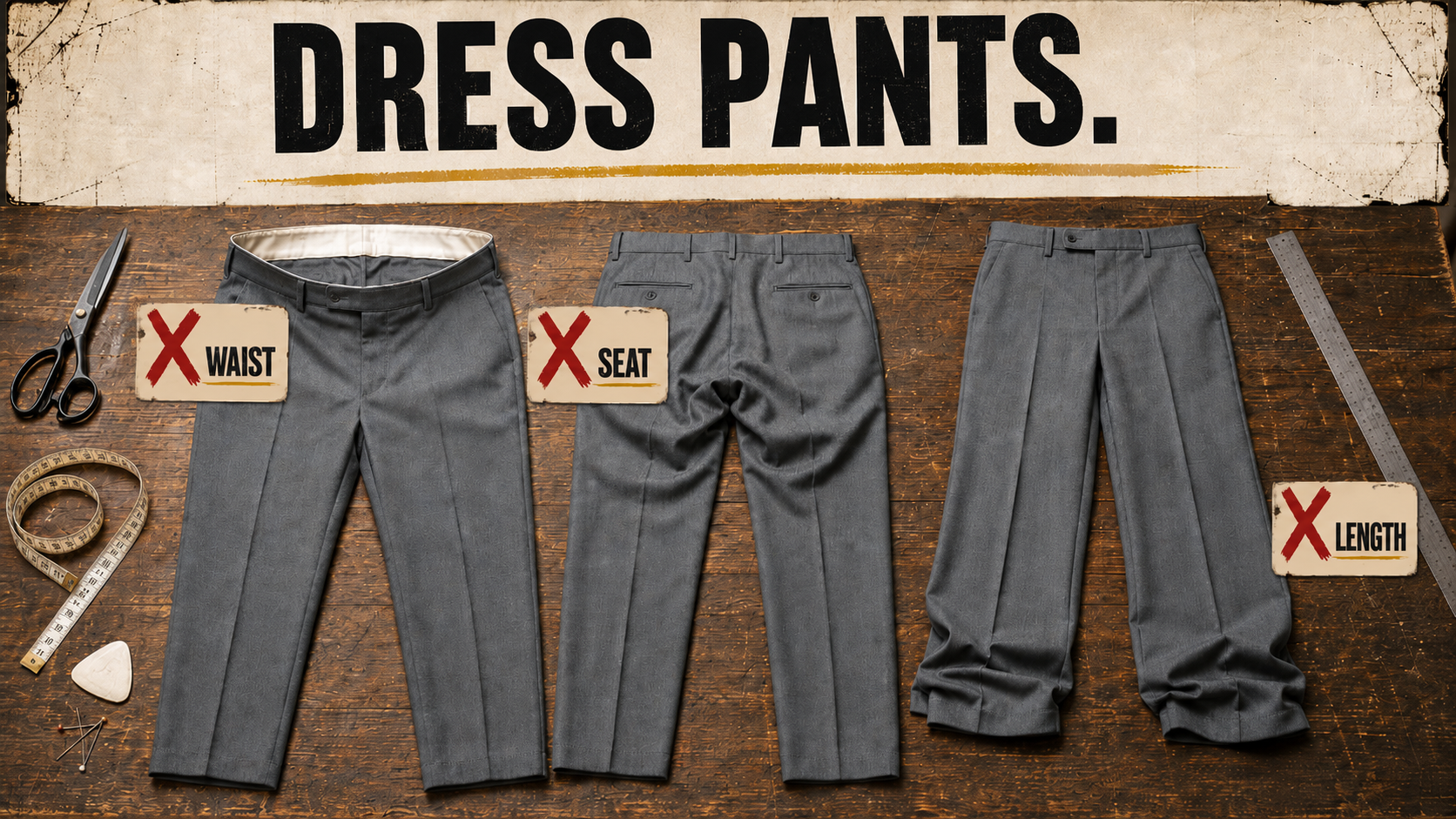
3 Things to Check First
1. Make Sure the Waist Is Already Pretty Close
It's really easy to find a pair of pants that are way too big everywhere and think, “I'll just take in the waist. Problem solved.”
I love the confidence. But that can turn into you throwing your sewing machine at the wall.
And your neighbors aren’t gonna like that.
The waistband connects to literally everything below it: the seat, side seams, pockets, and you know… the rest of the pants.
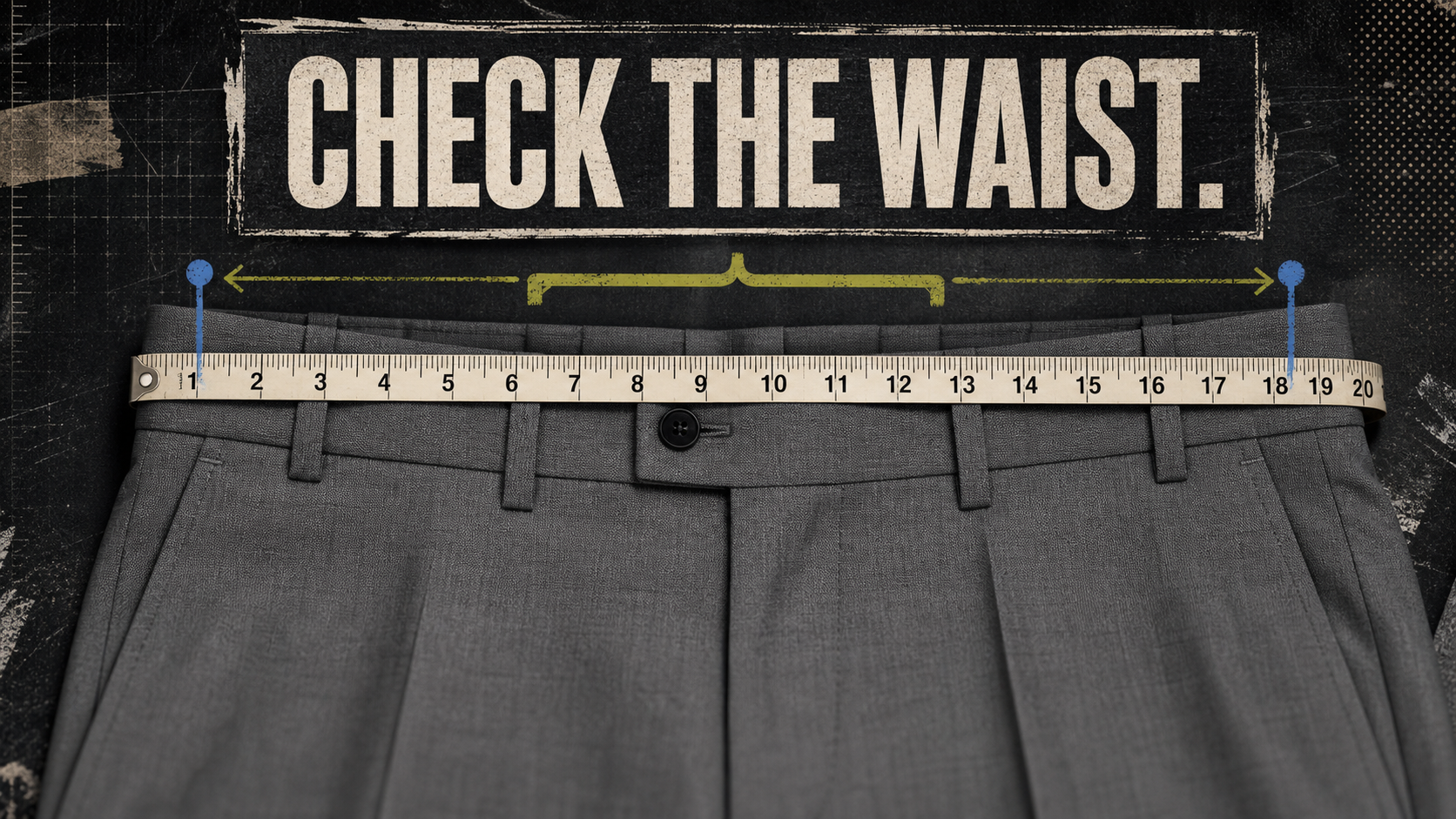
When you remove a lot of fabric at the waist, those other areas end up shifting and moving as well to keep everything balanced.
You might technically alter the waistband to fit better, but then you try and put your phone in your pocket and realize the pockets sit in weird places now.
Or the back looks all bunched up and weird. Now you've got three brand new problems to fix just to get back to square one.
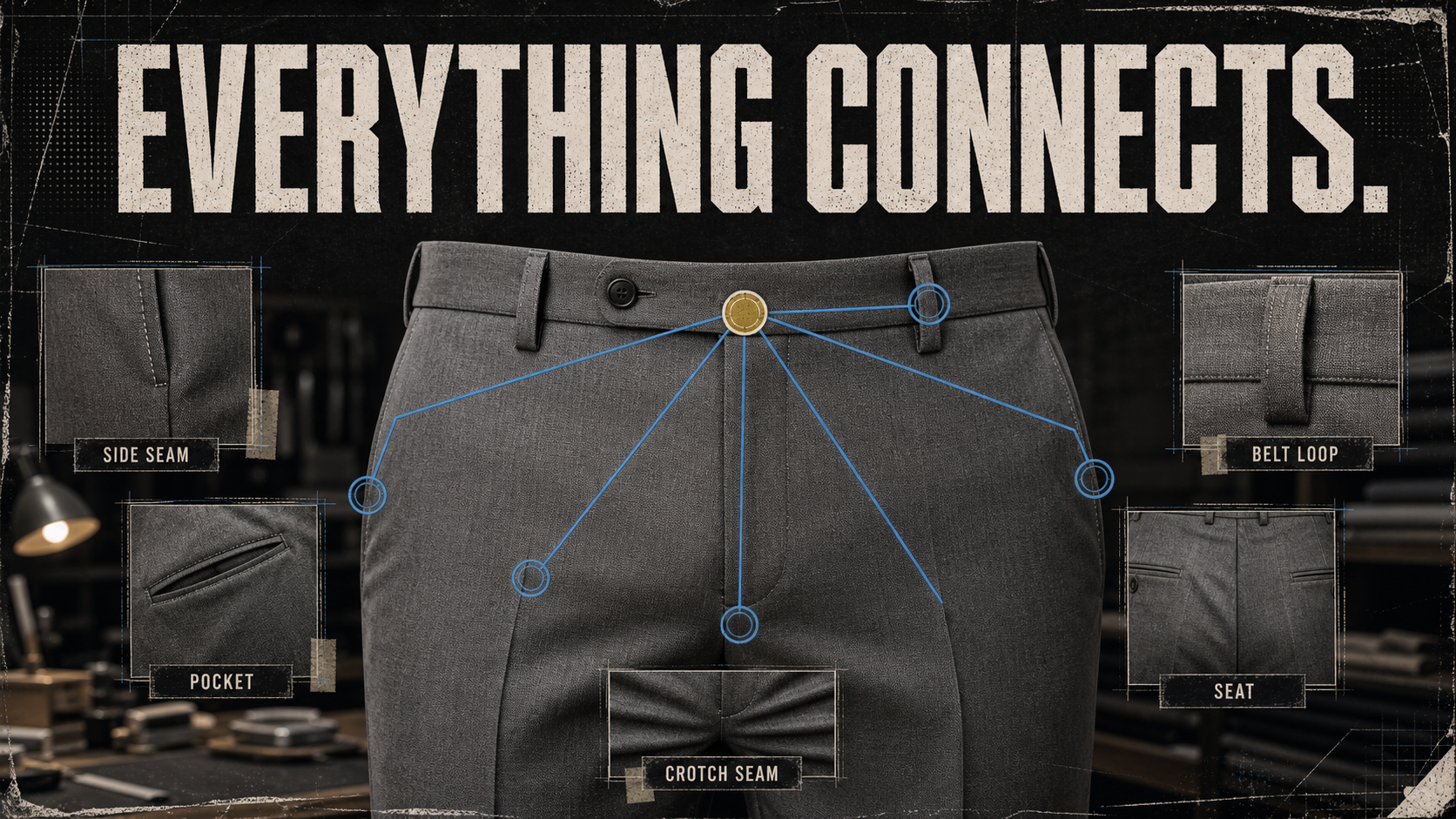
I usually tell people to size down 1 MAYBE 2 sizes from their regular size.
So if you normally wear a 34, a 35 or 36 can be doable and worth it, depending on how the rest of the pants fit.
A 38 or 40? That’s a big no bueno.
The number on the tag is only a guide, though. How they fit on your body matters way more.
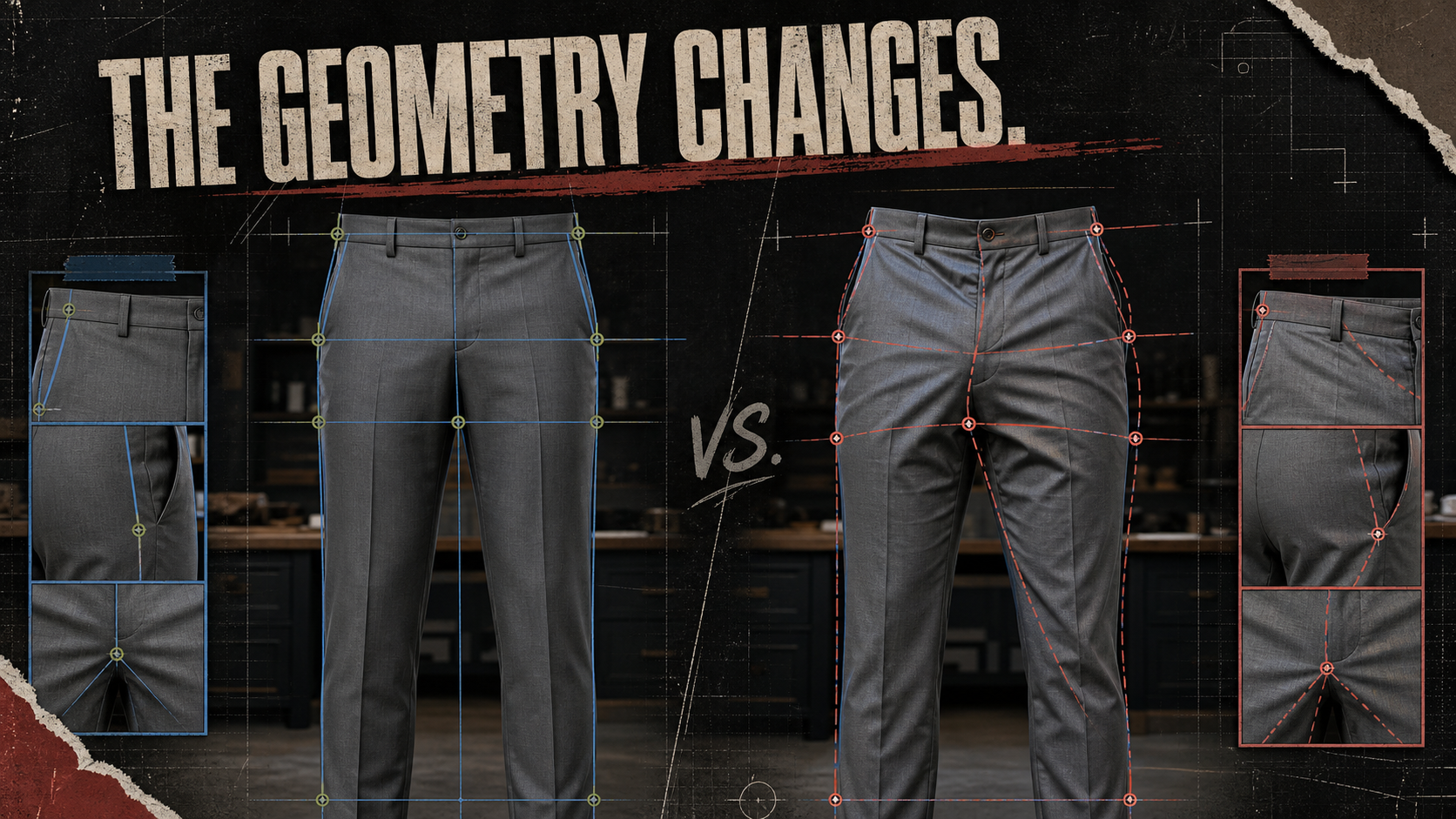
Try them on without a belt. A little looseness is one thing. Having to cinch the waistband so hard that fabric gets all bunched up is another.
You want small adjustments, not a weekend waistband renovation.
Oh and by the way I made a similar tutorial on how to tell if a dress shirt is even worth tailoring. Pretty good time to mention that before you dive into tailoring your dress shirts.
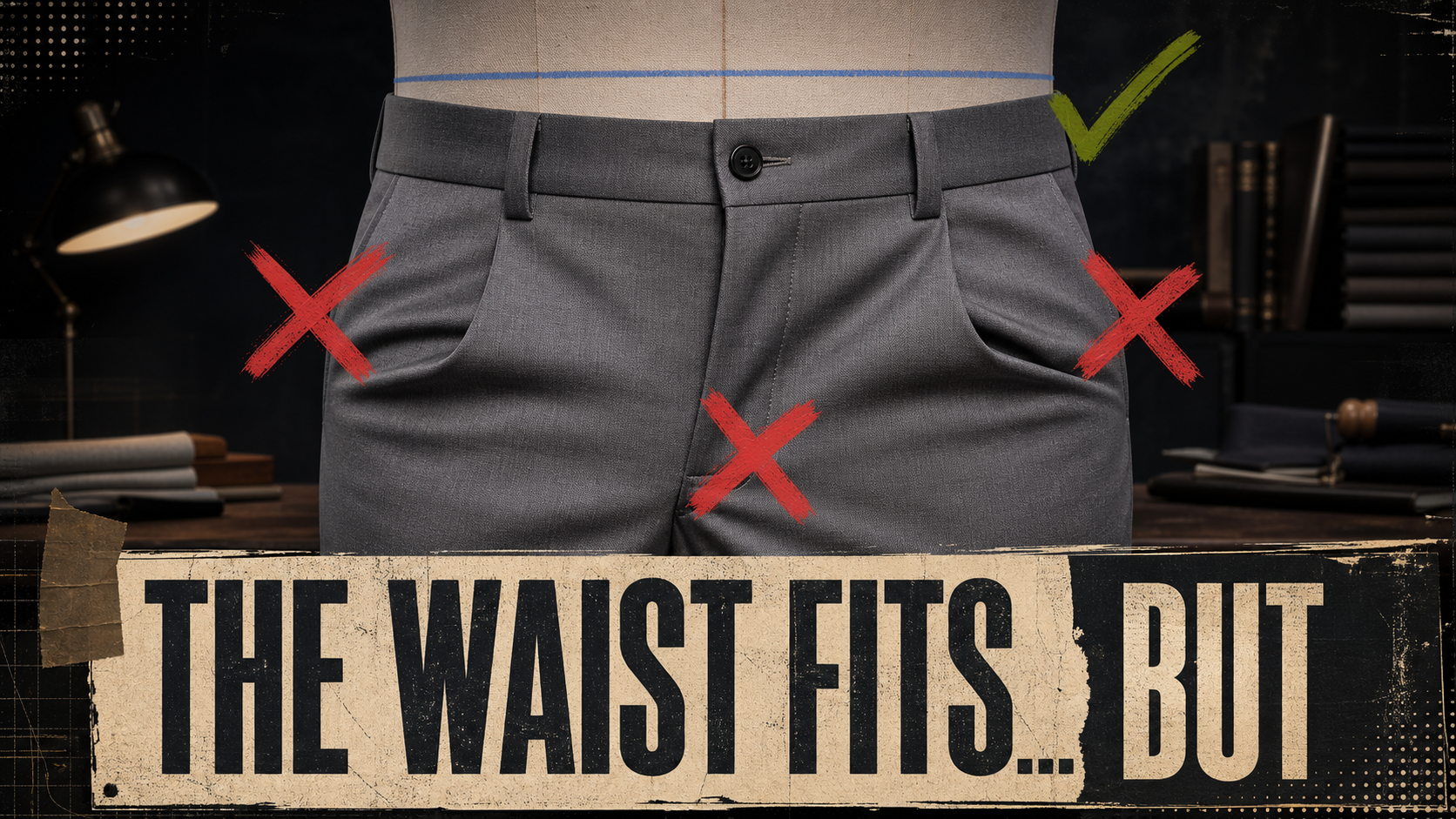
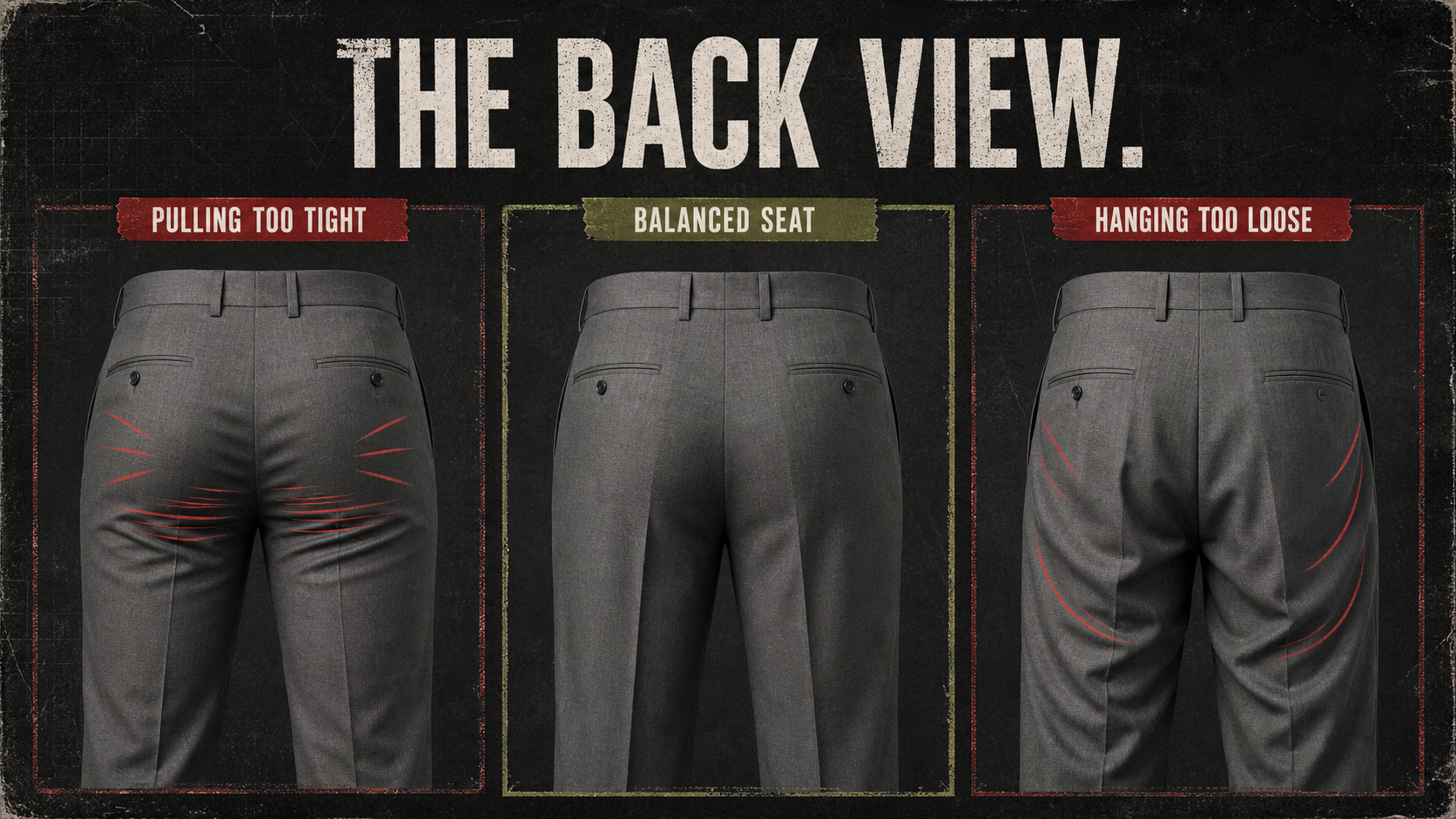
2. Check the Seat—The Booty Area
The seat is obviously the part of the pants that covers your butt. But you knew that already.
The thing is, this area affects both how the pants are gonna look from behind and how comfortable they feel when you move around.
Prance around your living room like a weirdo. Sit down and back up 40 times in a row.
Are those pants following your shape well or are they fighting you the entire time?
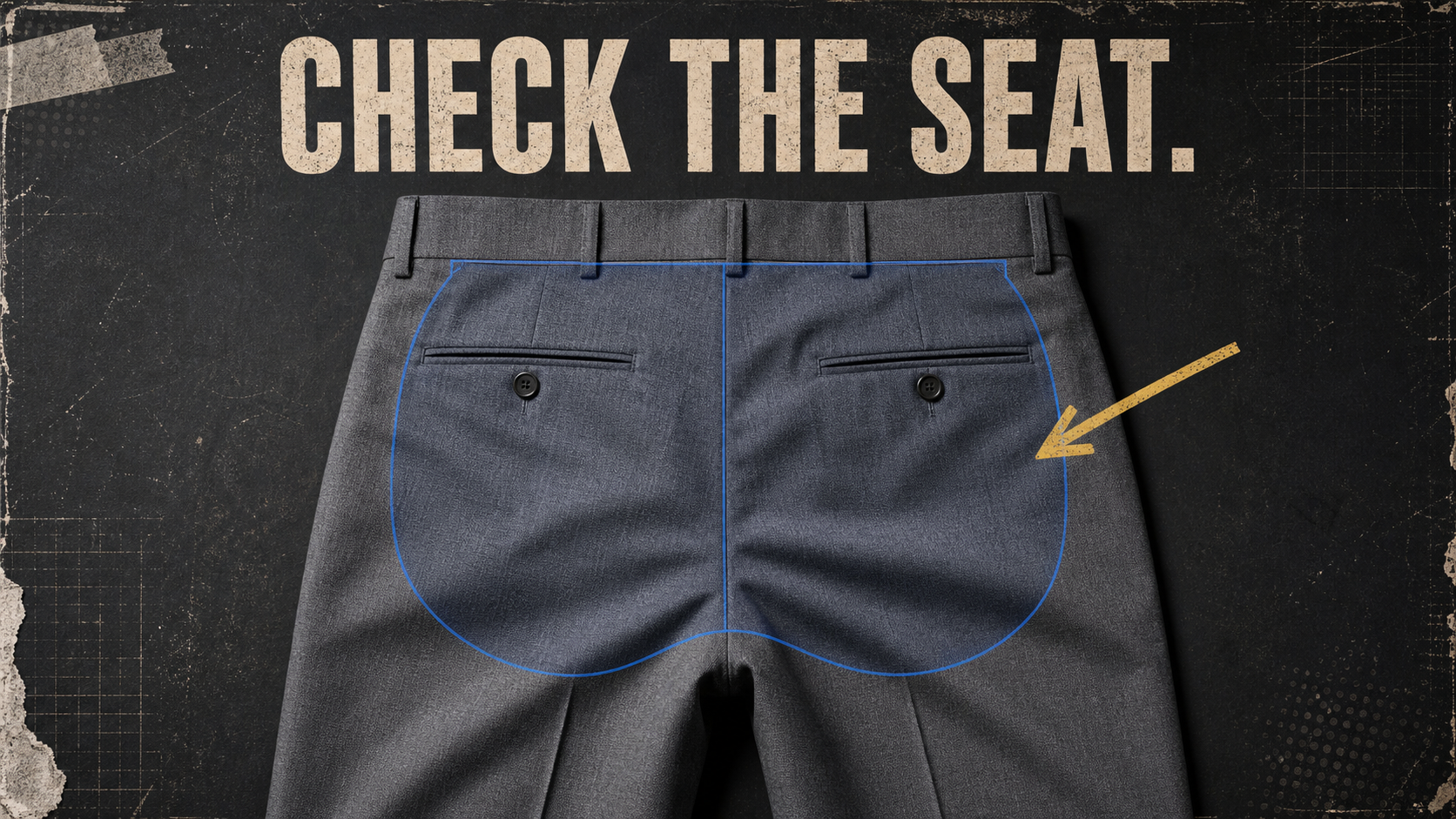
If the seat is way too tight:
Fabric pulling across your butt that looks ridiculous.
Back pockets being pulled open or out of shape.
Insane tightness when you sit or bend.
Some pants have extra fabric inside the seams that can be used to make them a little roomier. That extra fabric is called the seam allowance.
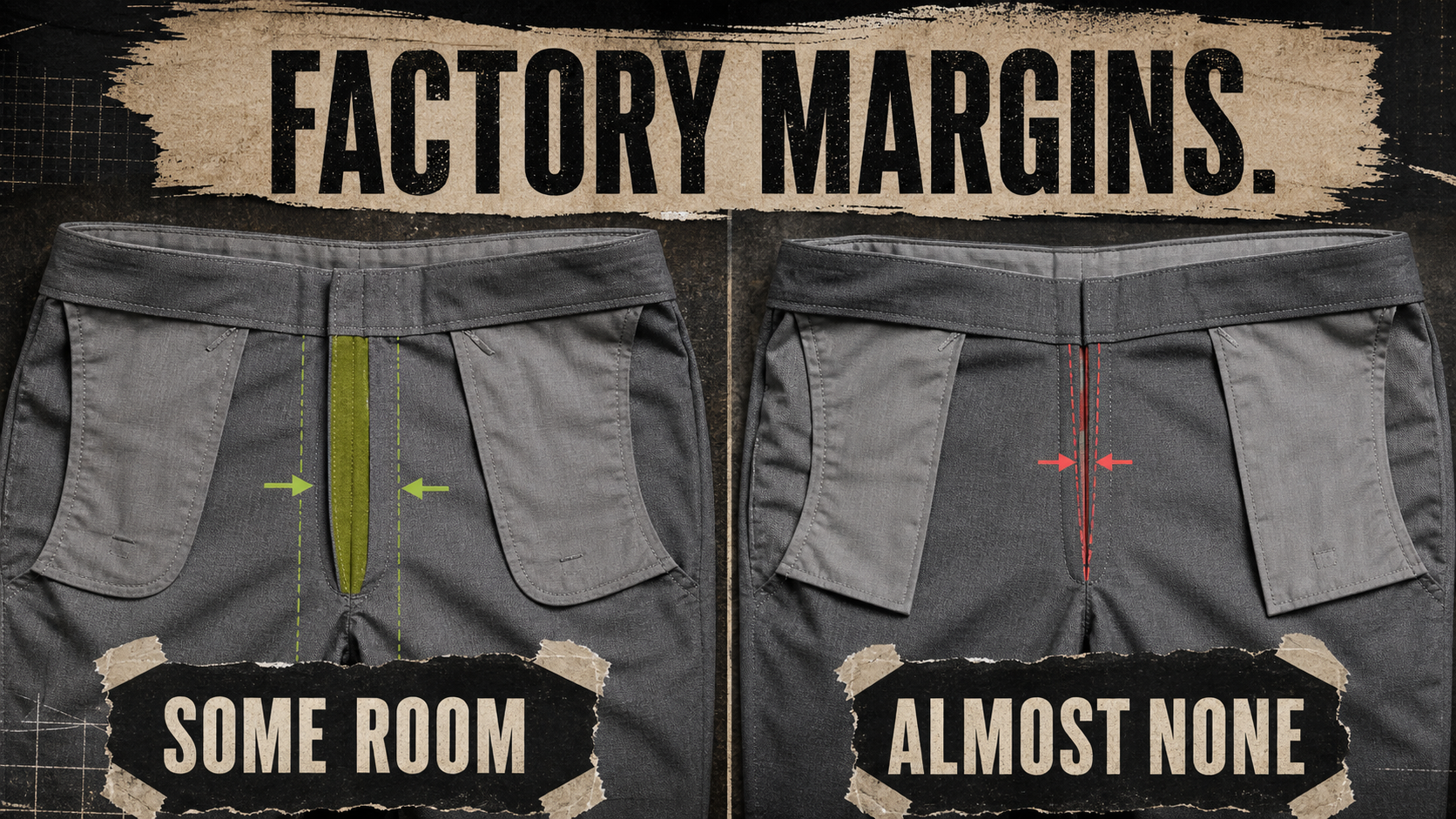
But if you bought them at a department store then don’t count on it. Manufacturers don’t want to waste fabric giving us options to give their crappy fitting pants.
A slightly loose seat is fine and gives you more room to work with.
A lot of extra fabric back there? That's what I call diaper butt. You don’t want none of that.
And here's where beginners can get tripped up: slimming the legs is fine, but that won't do anything to fix a baggy seat. slimming just means gradually narrowing the legs by taking in the seams on the side.
You slimmed the legs and they now look much better. Fantastic. But you’ve still got The Diaper Butt.
Make sure those dress pants already fit pretty well in the seat. It doesn't need to be skin tight or anything. It just shouldn't pull hard or sag all over the place.
3. Pay Attention to the Rise and Crotch Fit
Two areas you probably didn’t know existed.
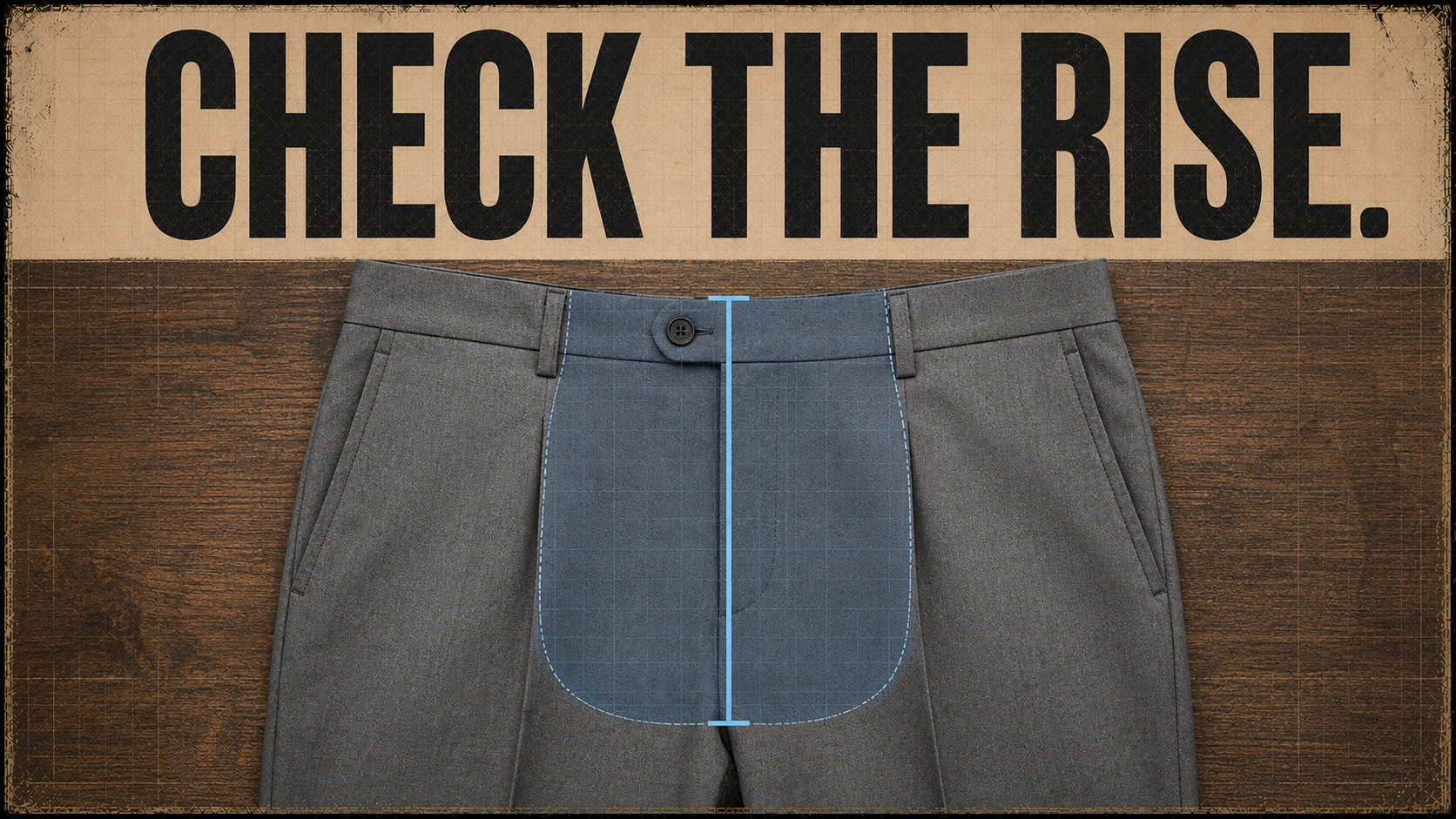
The rise is just the distance from the crotch seam up to the top of the waistband. It helps determine where the pants sit on your body and how much room you have through that area. So high rise and low rise determines where the pants will sit on your hips.
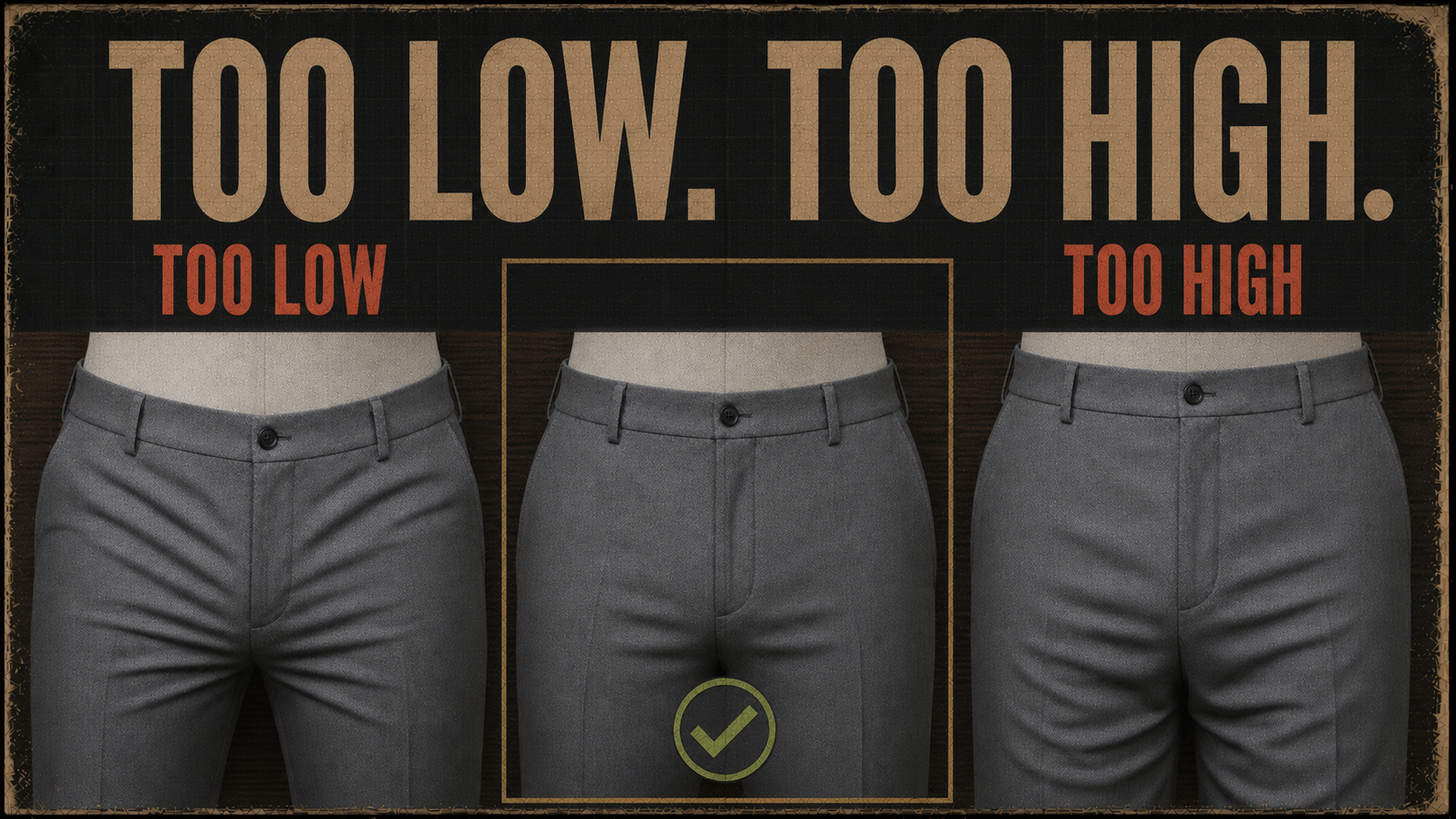
Try the pants at the height where you actually plan to normally wear them. Then sit, walk, and bend a little.
Does the crotch feel comfortable? Or are you constantly pulling the pants up, pushing them down, or making awkward adjustments you'd rather not make in public around children?
If there's too little room, the fabric is gonna pull upward and feel super tight. If there's too much room or the shape doesn't suit you, you may get a low-hanging crotch that looks sort of like reverse diaper butt.
A higher rise isn't automatically bad, and a lower rise isn't automatically good. What matters is whether the cut works for your body specifically and where the waistband hits.
Fixing the rise or the crotch isn't beginner friendly. At all.
If that area feels weird before you start sewing, tailoring anything below those spots probably won't give you the fit you’re looking for. Pick a pair that already feels mostly good there.
4. Look at those Legs
Now we're getting to the changes that make a lot more sense for a beginner.
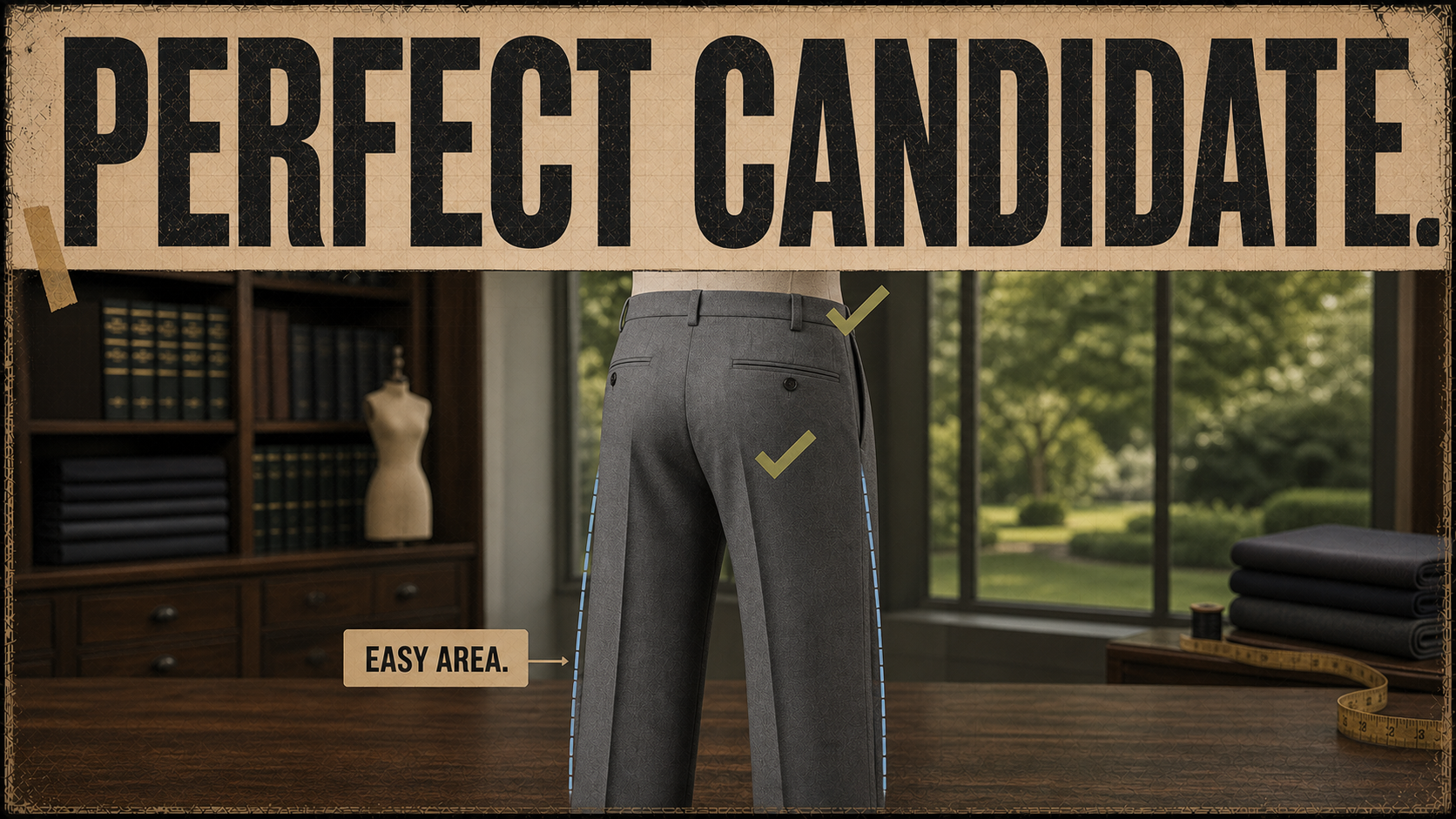
If the top half fits well but the legs are stupidly wide or too long? That's a promising pair dress pants to work on.
You might just need to:
Hem the pants: shorten the legs so they sit where you want them to.
Taper the pants: slim the sides so they fit your legs better..
For example, maybe the waist feels good, the seat looks good too, and you can sit normally—but the legs just pool over your the top of your shoes.
That's actually a much more manageable starting point than pants that fit terribly everywhere.
Here’s A Quick Check Before You Start
Try the pants on and ask yourself:
Is the waist pretty close to a good fit?
Does the seat look nice and smooth with no pulling fabric and the pants feel comfortable?
Can I sit and move like a normal human being without the crotch pulling or bunching awkwardly?
Are the main changes I want shorter or narrower legs?
If you're saying yes to those questions, perfect!
If not, skip them. Save yourself the headache.
Never touched a sewing machine? My beginner-friendly tailoring course walks you through everything step by step, so you can start tailoring your own clothes in literally a weekend. I’m not kidding.