How to Find a Cheap Used Sewing Machine for Beginners
One of the most game changing things you can start doing right now is learning how to tailor your own clothes at home. Nothing improves your confidence more than wearing all of the same store bought clothes as everyone else but altering them to fit you perfectly. Your t-shirts will actually be slim fit and your dress pants will fit better than pairs that cost $200. Literally everything in your closet will look custom fitted to you.
And it’s honestly so much easier than people realize. You can learn the overall basics in a weekend. People always think I’m kidding when I say that but I’m not at all.
Now obviously you’re gonna need to go out and buy a sewing machine.
I’m really passionate about teaching people how to do this, and that excitement ends up rubbing off on people who consume my content. But the absolute last thing I want you to do is get really excited about learning this, spend three nights researching sewing machines, dropping a couple hundred bucks on one, using it twice, and then six months later it’s sitting in a closet underneath a box of Christmas decorations.
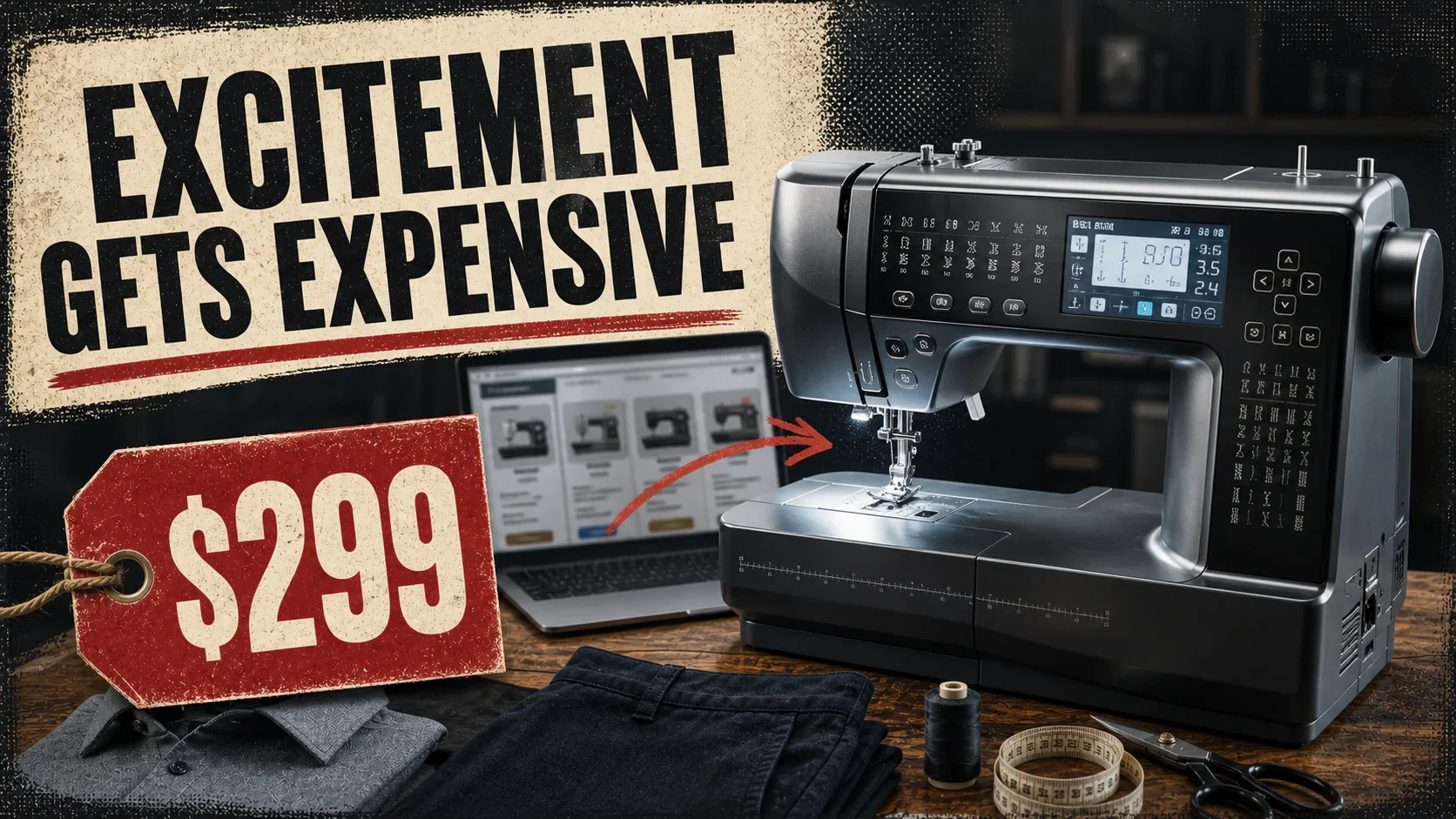
So when it comes to buying your first sewing machine, cheap is absolutely the name of the game.
But hold on. When I say cheap, I do not mean one of those little rinky-dink mini sewing machines, and I definitely don’t mean those stapler-looking handheld machines that look like somebody combined an office supply with a Happy Meal toy.
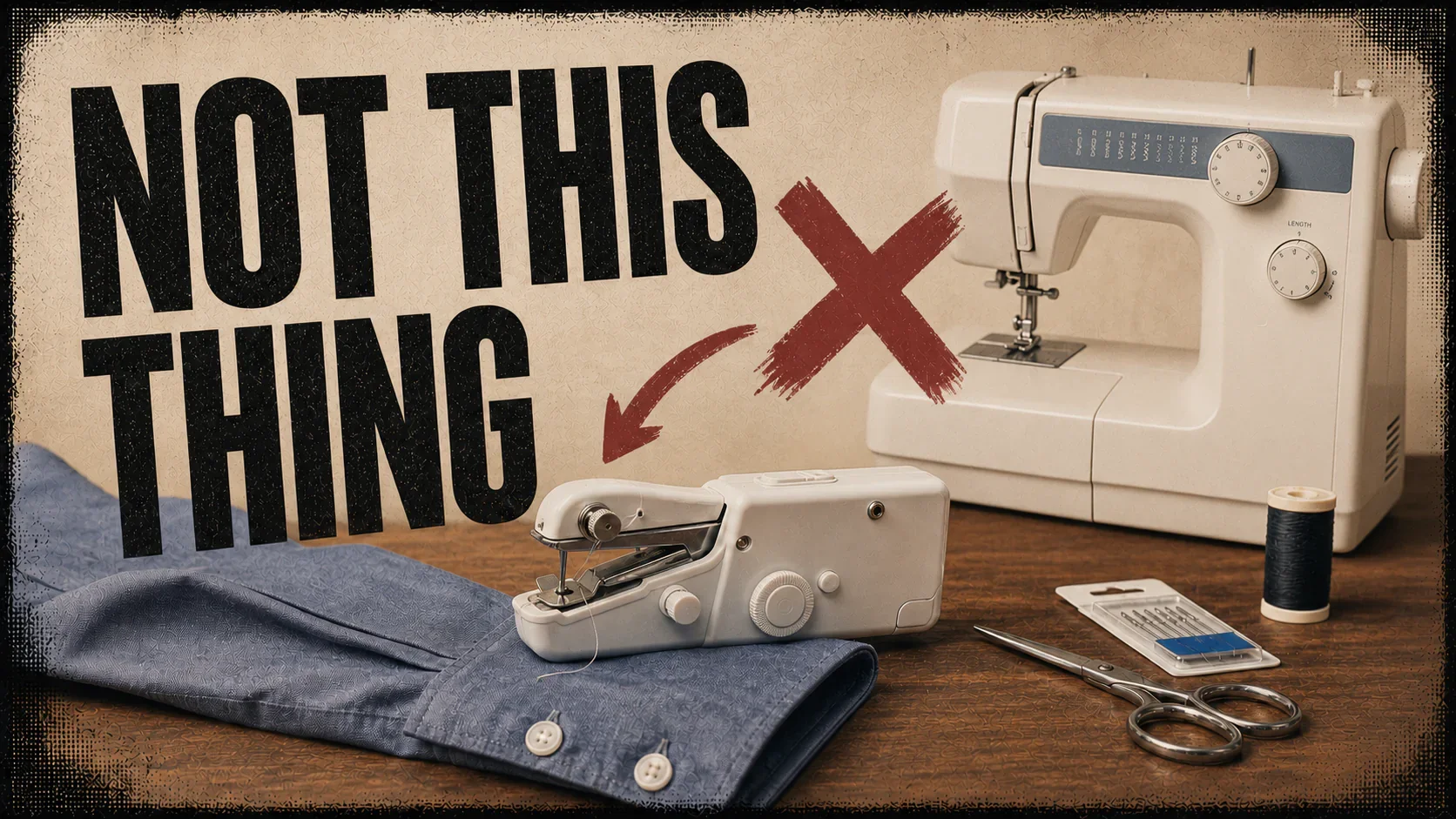
I mean a real, full-size sewing machine. Preferably one somebody else bought, used three times, got overwhelmed with, and now desperately wants it out of their house. That right there is the sweet spot.
Also, cheap does not automatically mean bad either, nor does old automatically mean bad. Buying an older sewing machine is nothing like buying a smartphone from 2011 where you take one picture and somehow everybody looks like they were photographed through a potato.
A lot of older sewing machines are actually fantastic. They were built with simpler parts, fewer electronics, fewer unnecessary features, and a whole lot less nonsense. For what we’re doing — tailoring our t-shirts, dress shirts, chinos and dress pants — that can actually be a good thing.
Now, that does not mean you should walk into somebody’s basement, see a dusty sewing machine that looks like it survived World War II and say, “Perfect. SD told me old machines are good so this will work just fine.”
It still needs to…you know…work.
It needs to turn on. The needle needs to move. It needs a foot pedal, a power cord, and it needs to actually make stitches. You know. Sewing machine stuff.
If you’re completely new to sewing machines and even that last paragraph sounded like another language, start with my Beginner Sewing Machine Tutorial: How to Use a Sewing Machine Step by Step. I walk through the basic parts of the machine, how to thread it, how the foot pedal works, how to load a bobbin, and the only things you actually need to understand before you start tailoring clothes.
How Much Should a Beginner Sewing Machine Cost?
Okay, cool, fantastic, SD. Enough philosophy. Give me a price.
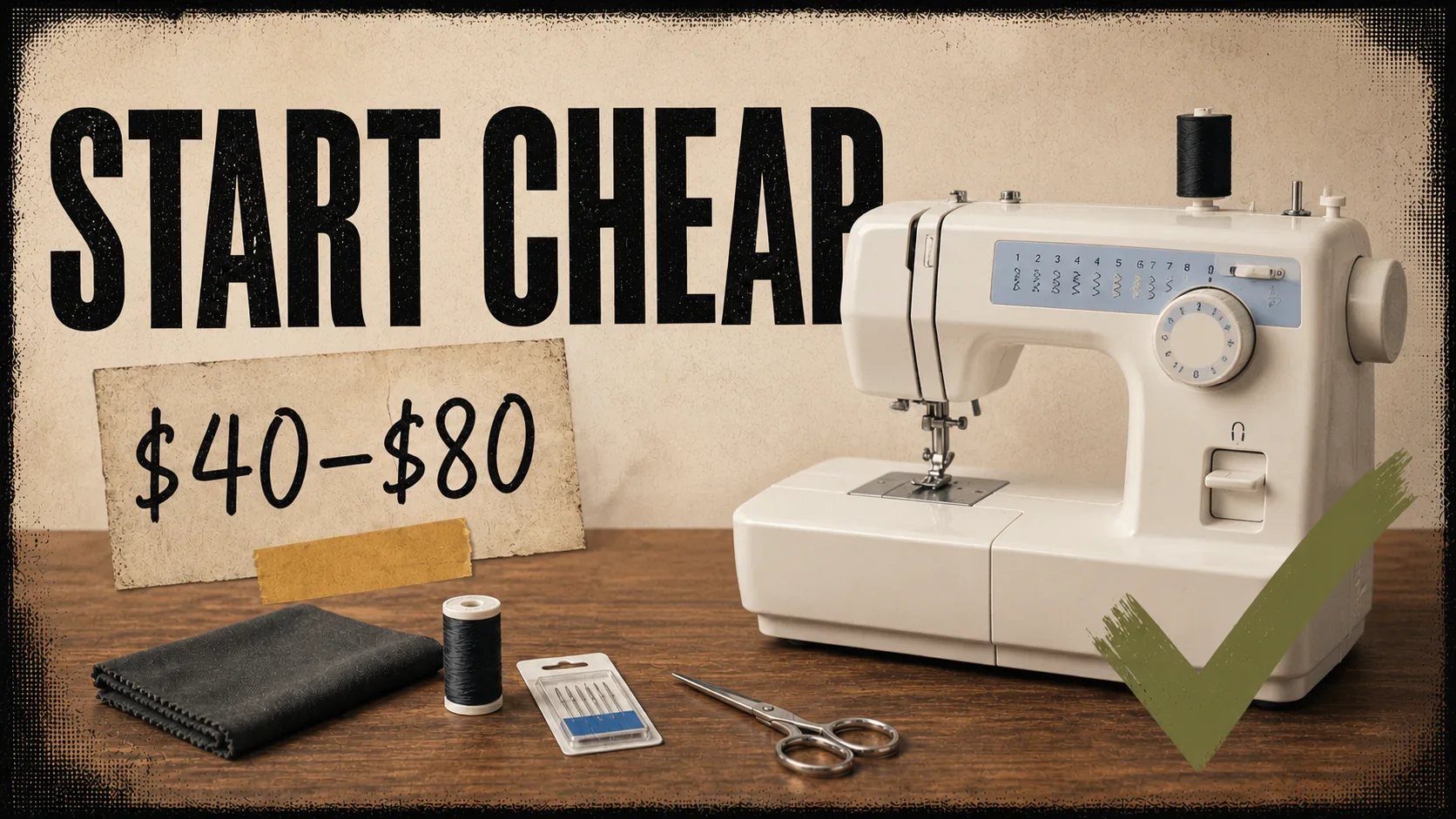
For somebody buying their first sewing machine to learn how to tailor their own clothes, I usually recommend looking somewhere around $40 to $80 for a used full-size sewing machine.
That’s a pretty big range, but there’s a reason for it.
On the lower end, I really wouldn’t recommend going much lower than $40. Once you start getting down into that $15, $20, $30 territory, that’s where you start running into those stupid little mini sewing machines again.
And listen, those manufacturers will tell you all kinds of beautiful stories on the box. “Portable!” “Beginner friendly!” “Perfect for everyday sewing!” “Complete sewing machine!”
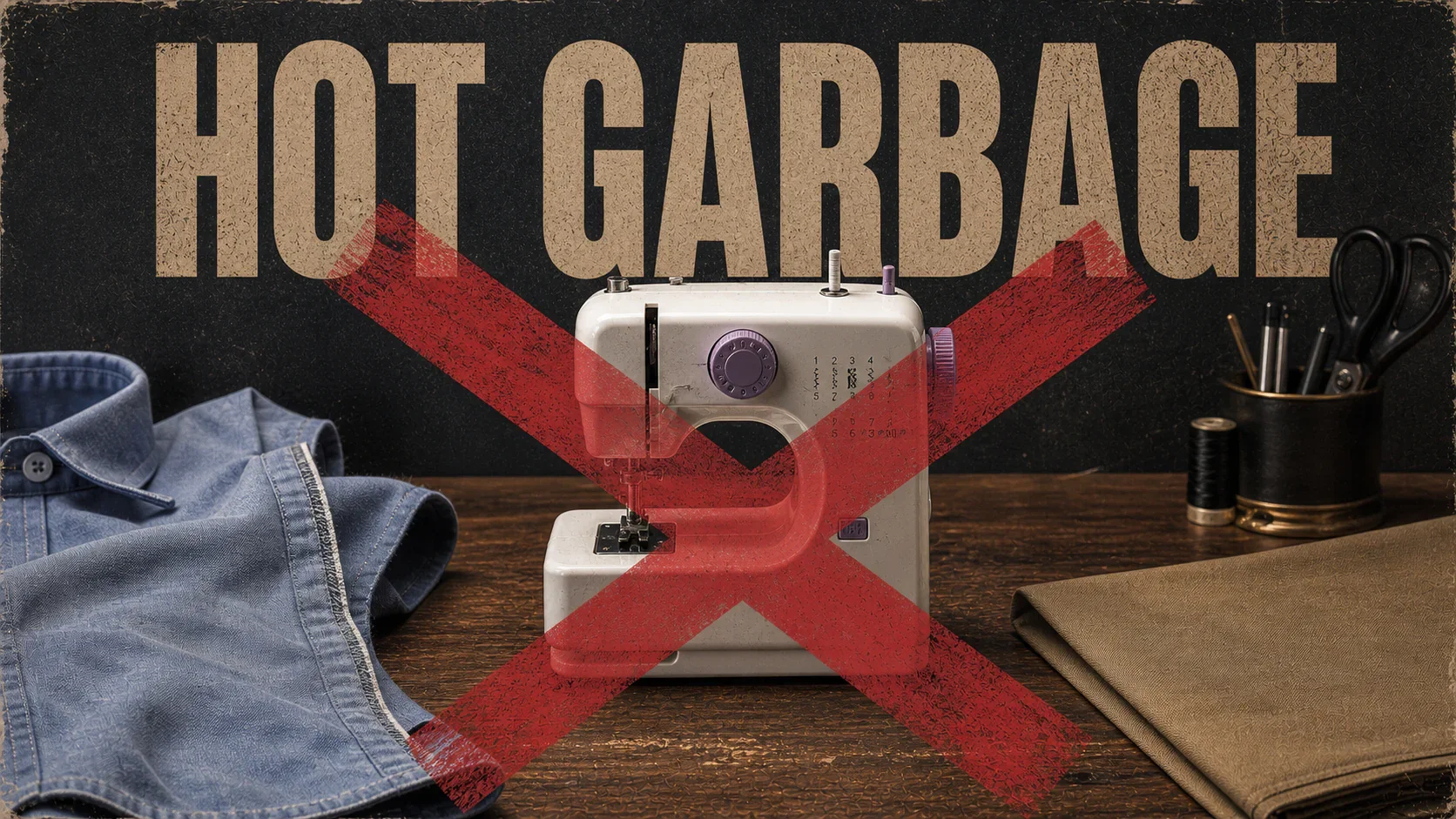
No. Those things are hot garbage. Avoid them like the plague.
The problem isn’t just that you wasted $20. The bigger problem is that you’re going to sit down, try sewing with one, get frustrated because the thread keeps jamming or the machine can barely handle sewing through a napkin, and eventually you’re going to think, “Man, I suck at this. Tailoring my own clothes is way too hard.”
Meanwhile, it might not be you at all. It might just be the Fisher-Price piece of crap sewing machine you bought.
And that’s what kills me about it, because instead of spending $20 on that little machine, you could have spent another $20 or $30 and bought a legitimate used full-size machine that can tailor almost everything in your closet.
Once you start creeping toward $100 to $150, though, I think you need to stop and ask yourself whether buying used even makes sense anymore. Around that price you can find basic full-size sewing machine brand new no problem.
If you see a solid used machine for $50, absolutely jump on it. If somebody wants $75 and it’s barely been used, cool. Still makes sense.
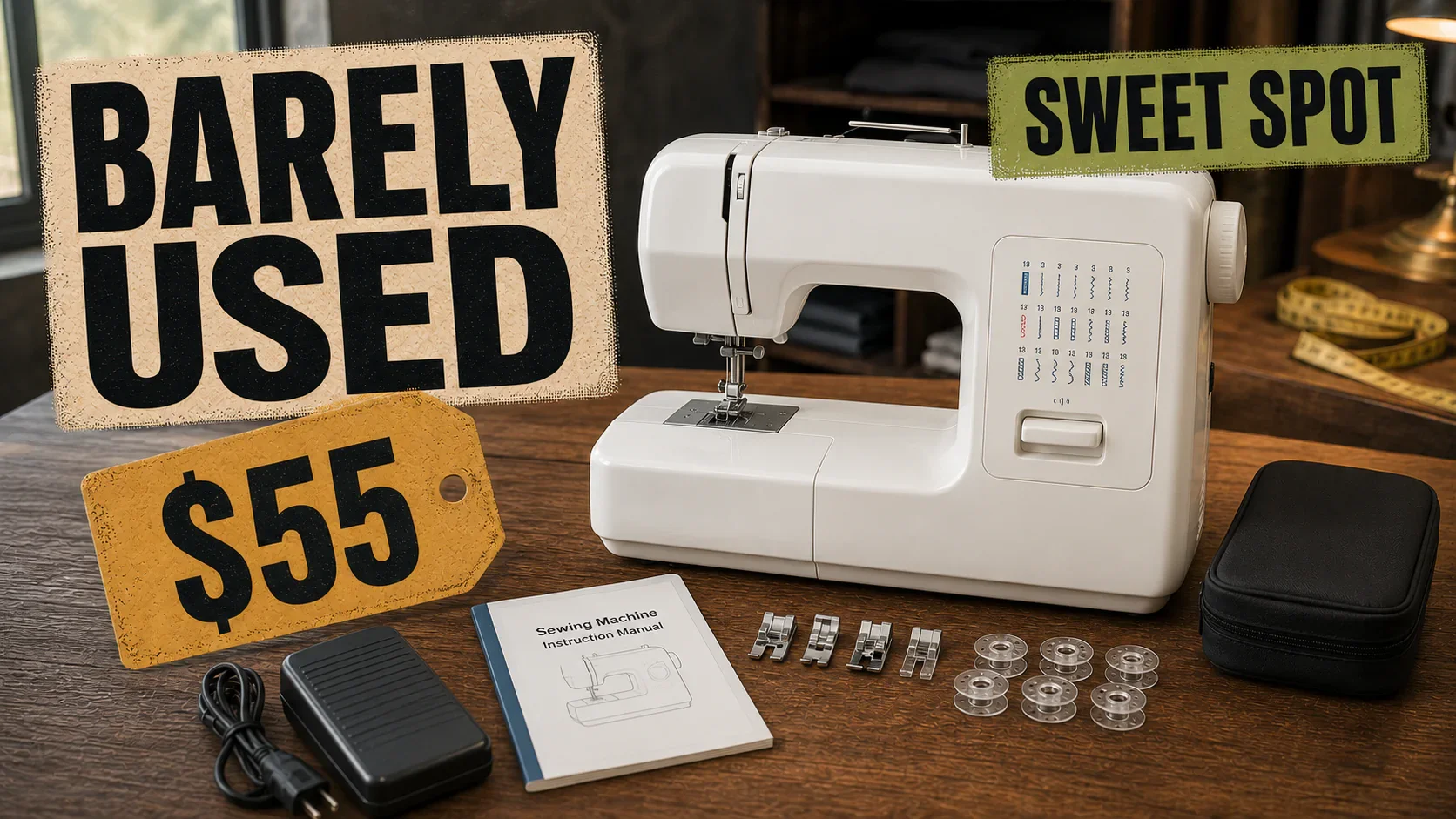
But if somebody wants $140, thats a big fat no. I’d rather you have the warranty, all the accessories, the manual, and the peace of mind that somebody’s kid didn’t try sewing a Lego through it.
Now once you start getting into that $200 to $400 range, that’s where you need to slow your role. Not because those machines are bad or anything. Not at all, they can be fantastic machines. They’re just way overkill for what you’re trying to do, and thats putting it mildly.
You Really Only Need a Few Sewing Machine Features
Once you start looking at more expensive machines, you’ll see quilting machines, embroidery machines, computerized machines, and all kinds of specialty machines. They probably have 47 stitches, 86 stitches, 110 stitches, or even 167 stitches. Guess how many you will use when tailoring your clothes? 2. And 1 is optional.
Most of those features are designed for people who want to pick up sewing as a craft or hobby. They might make quilts, embroider designs, straight up sew clothes from scratch, or do all kinds of decorative stitching.
That’s cool, but thats not what we’re doing at all. You’re trying to take a dress shirt that fits like a cardboard box and tailor it so it actually follows the shape of your body.
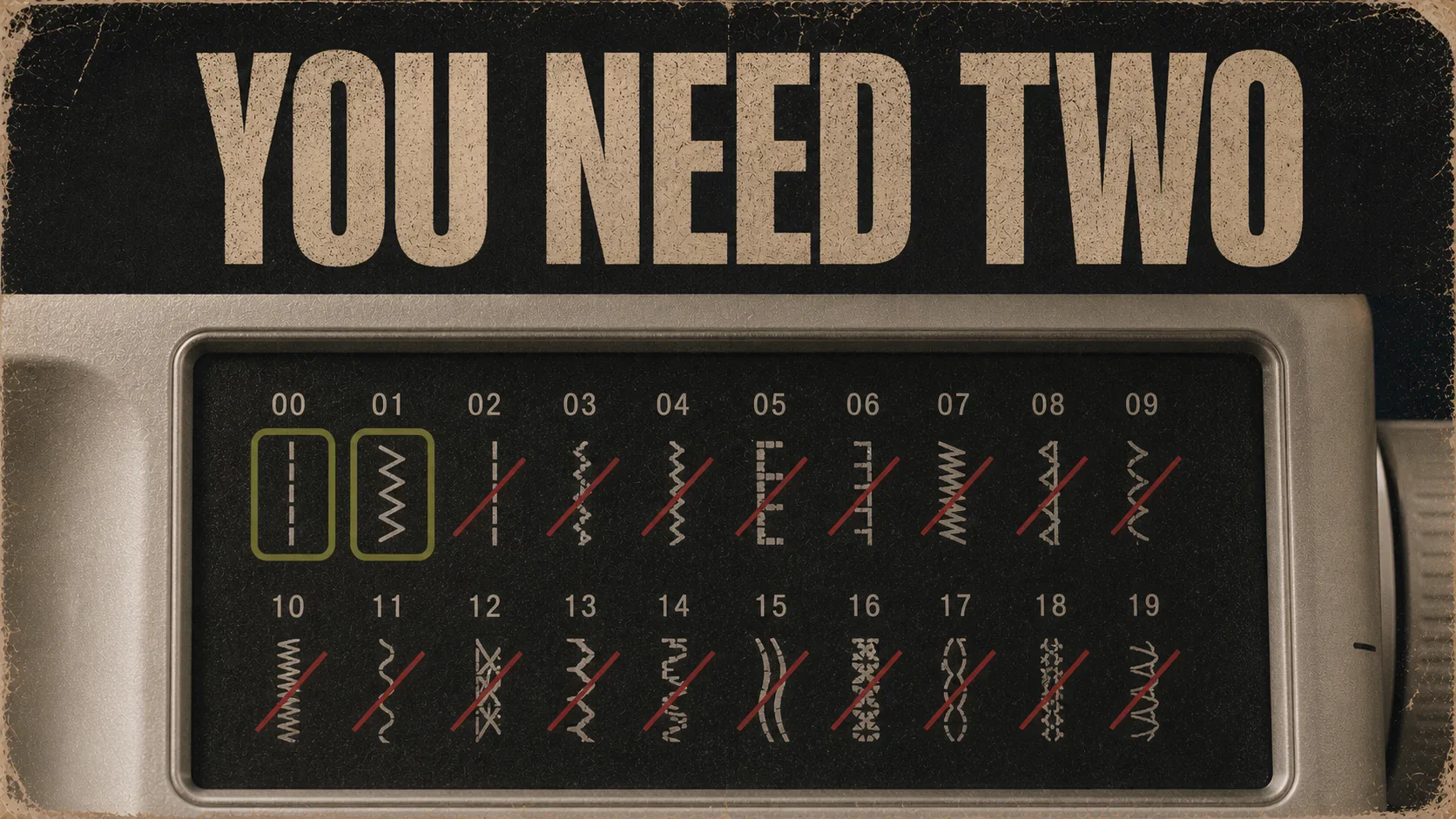
For basic clothing alterations, you really only need a straight stitch, a zigzag stitch, and the ability to backstitch.
That’s pretty much it.
Your straight stitch is going to be your bread and butter. Let’s say you’ve got a T-shirt that you want to tailor. The side seams go straight-up-and-down and make you look like you’re wearing a cereal box. You can turn the shirt inside out, mark the shape you want, sew a new side seam, and now the shirt that you spent $8 looks better than t-shirts that cost 5 times that price.
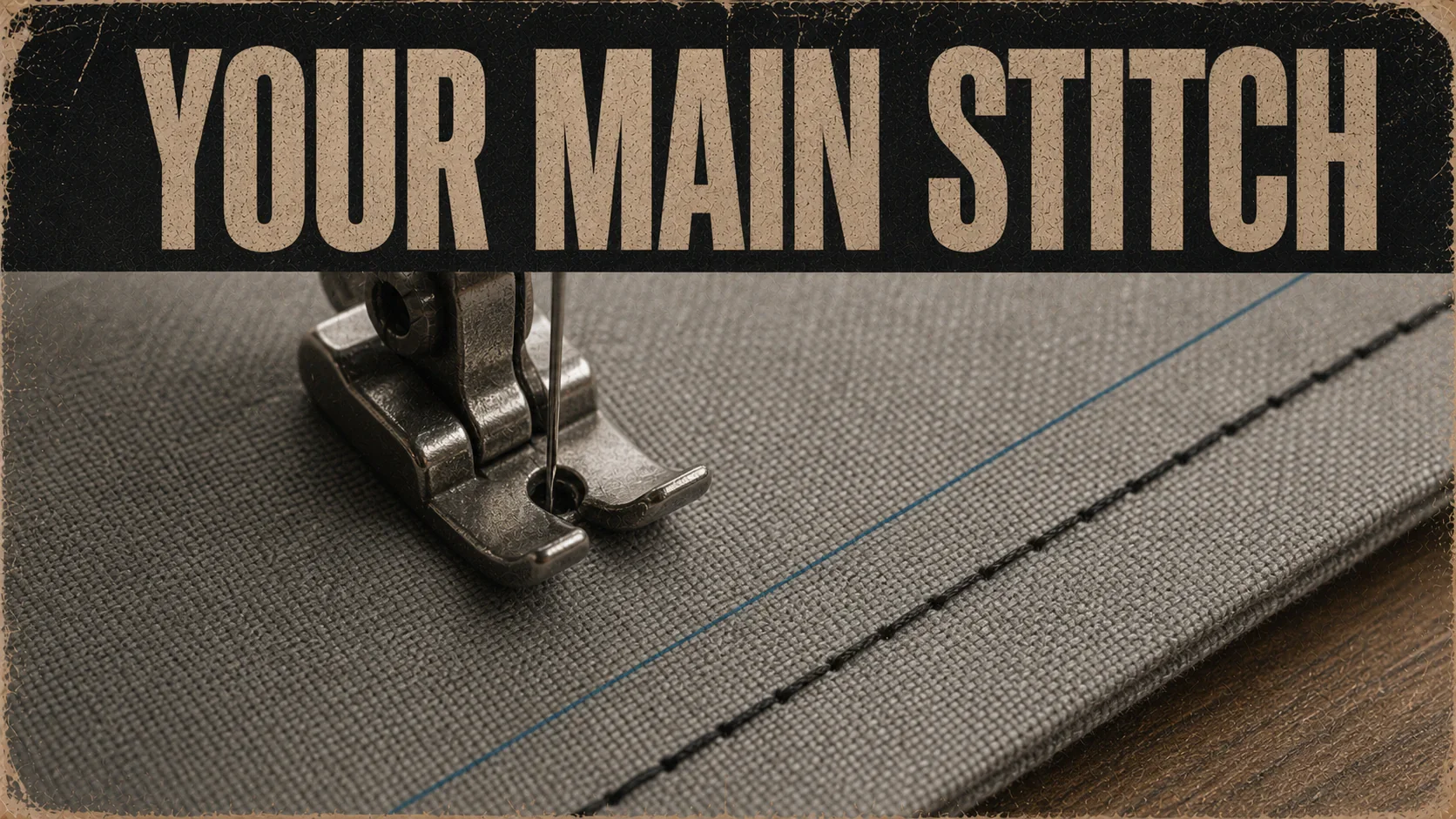
And If you haven’t tailored anything before, don’t panic. I have a How to use a sewing machine tutorial that walks you through the only parts you need to learn, which aren’t many.
The zigzag stitch is used for a few different things actually. You can use it as an alternative stitch when you need a little stretch in your garment like when you’re shortening a t-shirt. But the biggest thing you’ll use it for is for finishing raw fabric edges.
After you sew your new side seam and cut off all that extra fabric, you’ve got a raw edge sitting there.

Depending on the fabric, that edge will probably start fraying on you over time, and we don’t want any of that nonsense. So we run a zigzag stitch along the raw edge to help contain it.
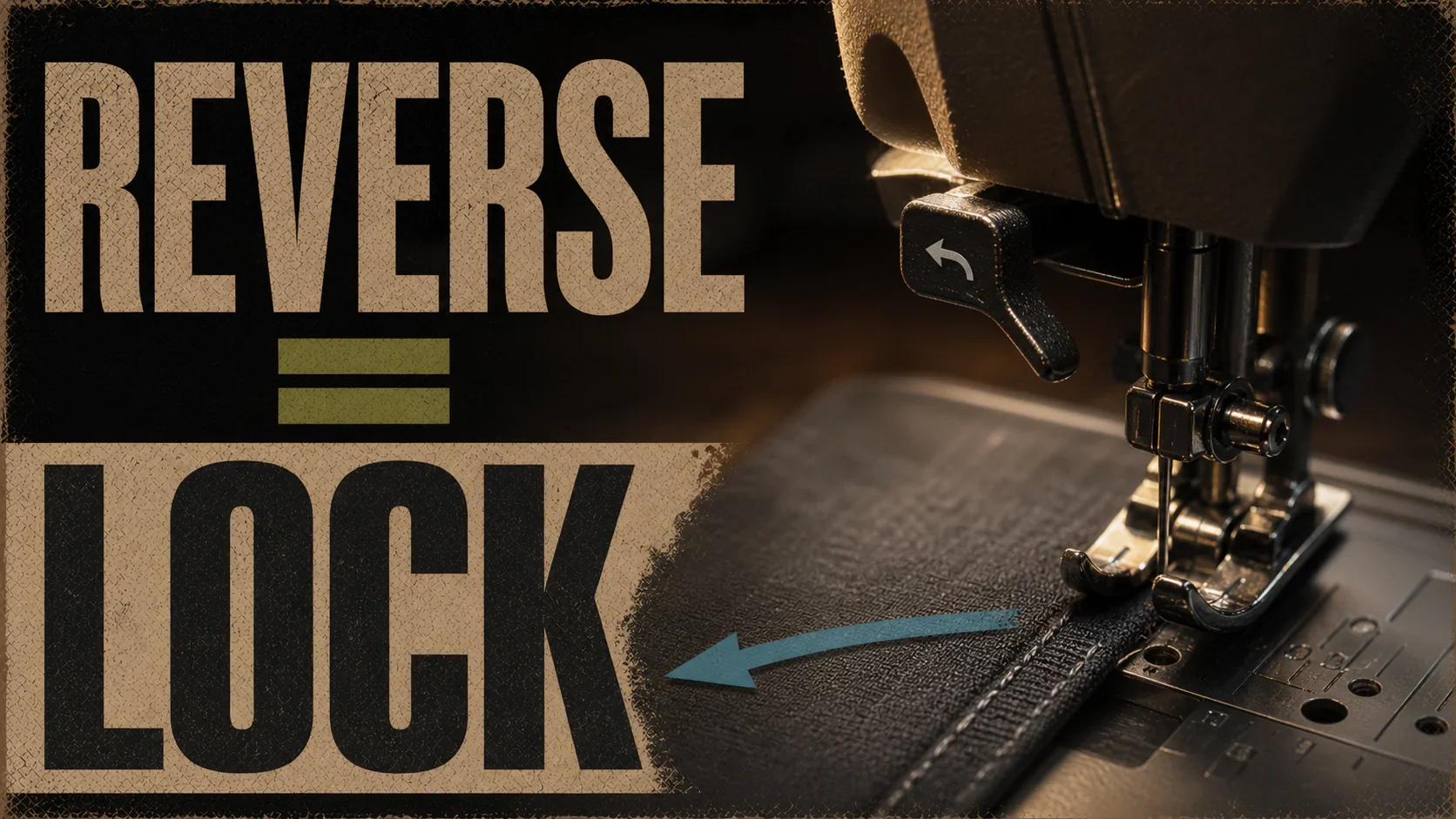
The backstitch isn’t really a separate stitch as much as it is a function of the machine. It allows your machine to sew backward so you can lock the beginning and end of your seam in place. You’ll sew forward a little bit, press and hold the backstitch lever or button, sew backward over the same area, and then continue forward.
Do the same thing at the end and your stitches won’t come undone later in the washing machine.
How many sewing machines can backstitch? I have absolutely no idea. I’m going to say 69%.
Very scientific.
The point is that more features aren’t a bad thing, they’re just not needed in any way shape or form. When tailoring your clothes you won’t use any of them. Ever
If you find a great deal on a machine that happens to have 70 different stitches, cool. But don’t make those features the reason you buy a more expensive machine.
Most beginners don’t need more features. They need practice. They need reps. They need time behind the machine making mistakes and screwing things up.
You Do Not Need the Same Sewing Machine I Use
Me personally, I use the Brother ST371HD. It’s a heavy-duty sewing machine, and I love it.
But if you’re brand new, no, don’t buy it. That would be complete overkill.
Start with a cheap used entry level machine by Singer or Brother. Figure out whether you even enjoy doing this first. That way we can limit the buyers remorse as much as possible.
Here’s what I really want you to understand: the sewing machine is just the tool. Learning to control it is the skill. You can hand somebody a $500 machine and they can still tailor crappy looking clothes.
Meanwhile, somebody who has spent a few weeks practicing on a $40 sewing machine can knock out some perfect fitting clothes no problem.
The best way to get reps in is to practice. And for that I recommend practicing on a bed sheet. It’s cheap, huge and allows you to practice sewing stitches hundreds of times. I go more in-depth into that here. It’s a much better plan than only using old clothes you have laying around.
Where Should You Buy a Used Sewing Machine?
Okay, Mr. Stylish D. Now I know how much I should spend. Where do I actually find one?
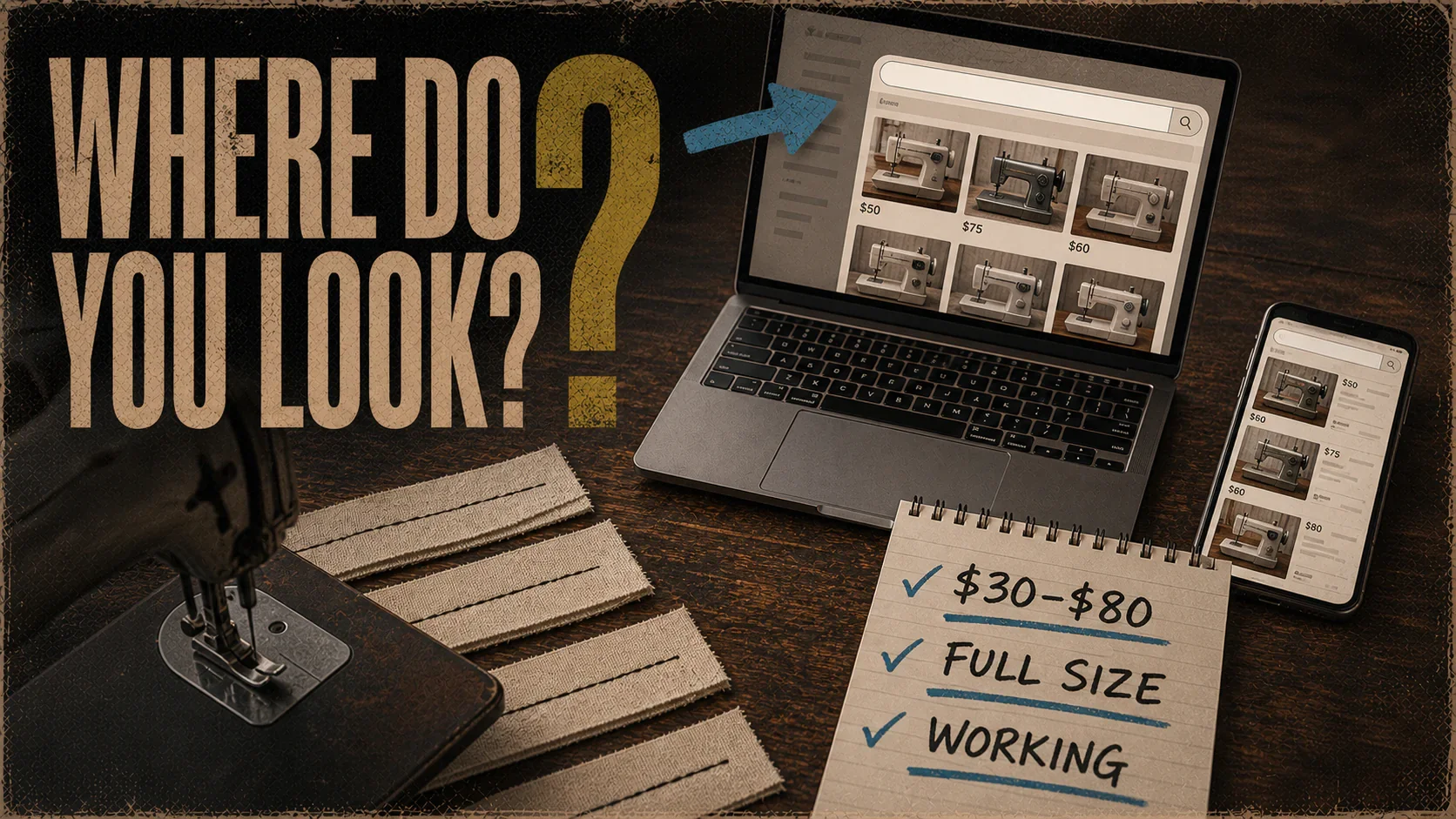
Facebook Marketplace.
And honestly, it isn’t even close.
Sewing machines are one of those things people buy during random bursts of ambition. Sunday afternoon somebody says, “I’m going to start sewing.” They watch like twelve TikToks, order a sewing machine, and they’re fired up.
Tuesday comes. They try winding a bobbin. The thread gets tangled. The machine makes a weird noise. And just like that they’re sewing career is over.
Six months later that machine is sitting in a closet somewhere never to be used again.
That person? That’s who you’re looking for.
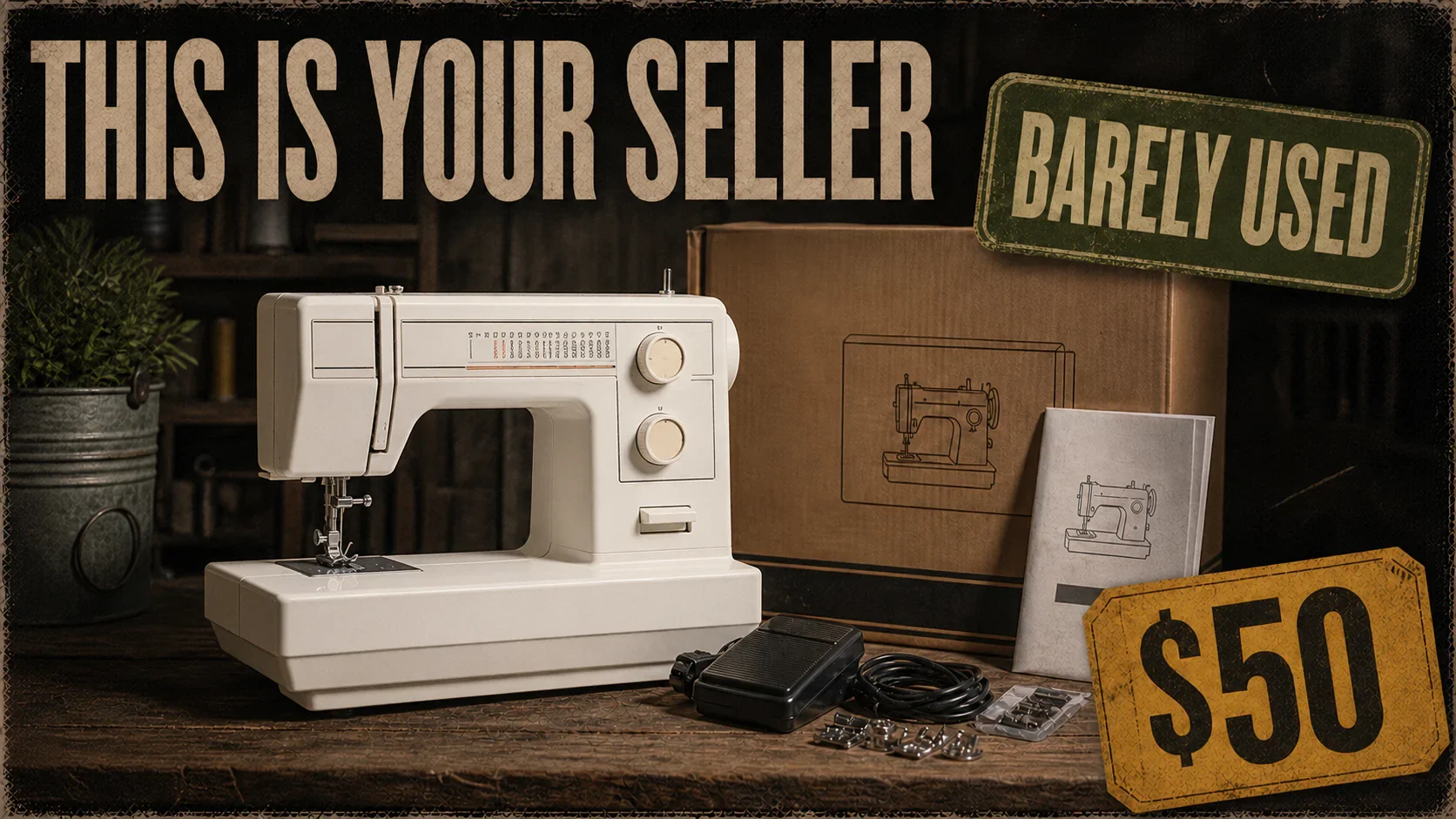
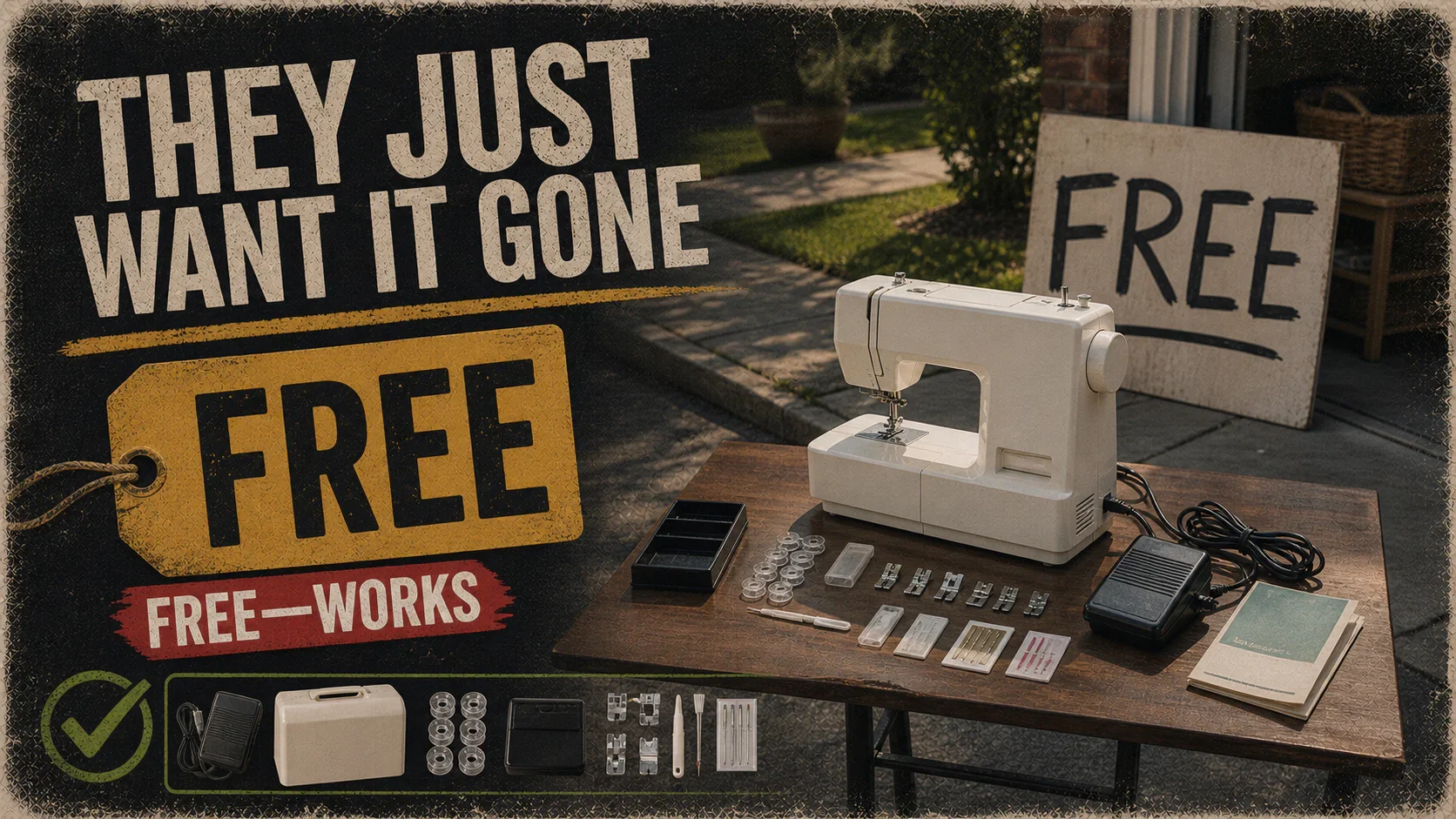
You’re not looking for the person who’s been sewing for 30 years and knows exactly what their machine is worth. You’re looking for somebody who bought one, barely used it, realized sewing wasn’t for them, and now just wants the thing gone.
That is where you can find a ridiculous deal. I just saw someone buy a Singer 4211 Heavy Duty sewing machine on there for $40. $40!!!
Try searching for certain brands like Brother, Singer, Janome, and Kenmore. Kenmore made some really solid sewing machines years ago.
They don’t make new sewing machines anymore, but there’s still plenty of older ones floating around.
If you find one that works properly and has the basic features we talked about then definitely don’t be afraid to pull the trigger.
Remember, we don’t care whether the machine has Bluetooth, a touchscreen, or if it can communicate with NASA.
We care whether it can make a straight stitch and a zigzag stitch without having a nervous breakdown.
Ask Your Family Before You Buy Anything
This is one people always overlook: ask your family.
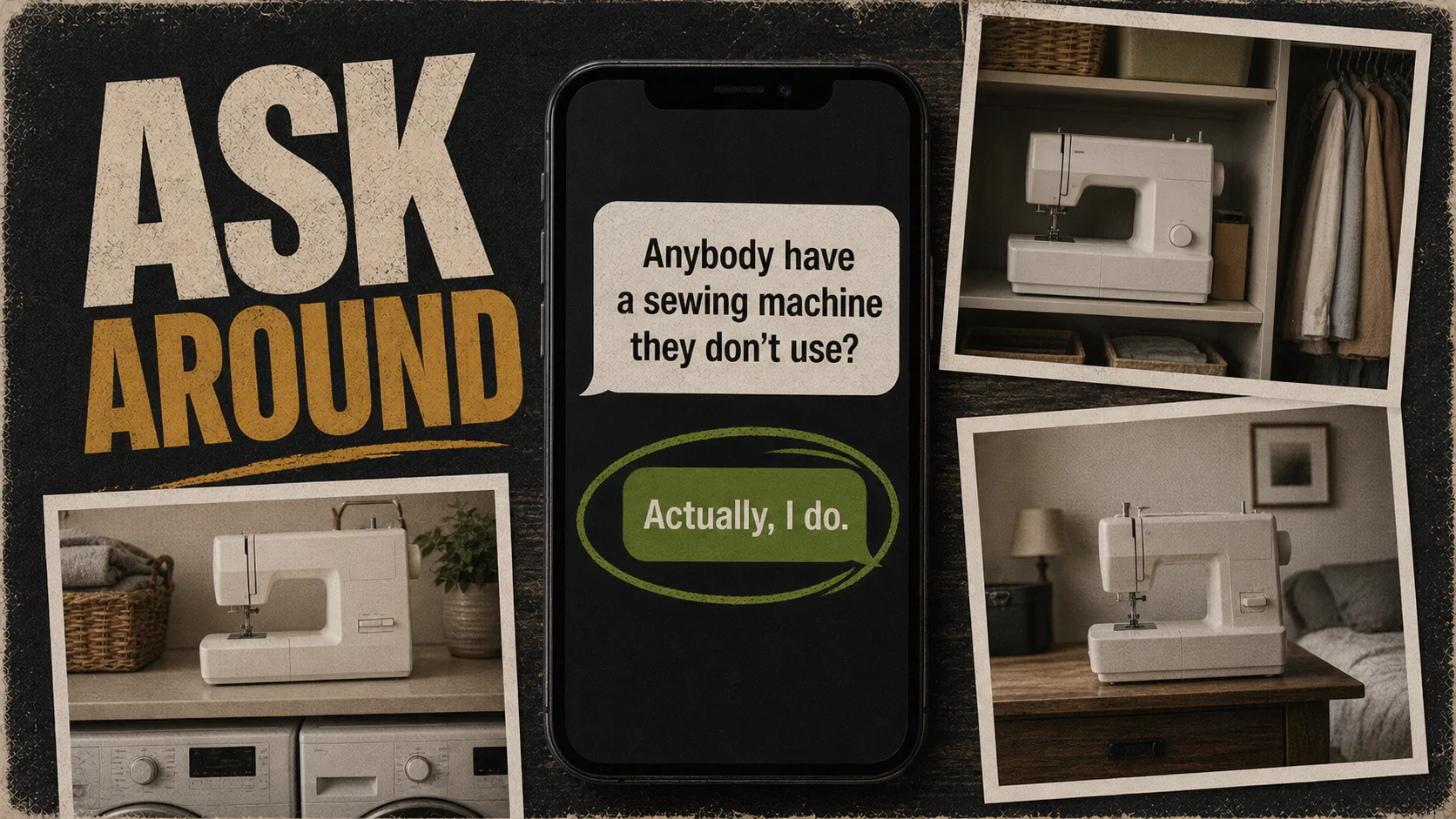
Seriously. Before you spend any money, send a message in the family group chat and ask, “Anybody have an old sewing machine they don’t use?”
I would honestly be shocked if somebody within your family or social circle doesn’t have one. Maybe your mom has one. Your aunt. Your grandma. Your cousin bought one five years ago. Your girlfriend’s mom has one sitting in a closet.
Somebody knows somebody with a sewing machine they haven’t touched in years.
They might sell it to you dirt cheap. Sometimes they’ll just give it to you because they’re tired of looking at it.
Even better.
If Facebook Marketplace isn’t popular where you live, use whatever local marketplace people use in your area. OfferUp, Craigslist, garage sales, estate sales, local buy-and-sell groups, thrift stores. Anywhere where people are trying to get rid of the stuff they don’t want anymore.
Sewing machines are perfect for this because they’re big, heavy, and annoying to store.
Once somebody decides they aren’t going to use it anymore, they get to a point where they’re thinking, “I don’t even care anymore. Somebody please get this thing out of my house.”
That’s your moment.
Be Careful With Thrift Store Sewing Machines
You can definitely find good sewing machines at thrift stores, but thrift stores can be really hit or miss. You might find a perfectly good machine, or you might find like 73% of a sewing machine.
No foot pedal. Missing power cord. Random presser feet that came from some completely different machine. No bobbin case. No accessories.
And somehow they still want $89.99.
Why am I paying full price for 3/4ths of a sewing machine?
What Should You Check Before Buying a Used Sewing Machine?
Don’t find a machine listed for $40 and immediately drive across town throwing money out the car window.
There are a few things I want you to check first.
The first one sounds painfully obvious: Does it have a power cord and foot pedal? People sell machines without accessories all the time. The machine wasn’t even there’s, it was their grandmas so they have no idea if there’s any accessories for it anywhere.
Maybe they found it in storage. Maybe they’re helping somebody clean out a house. They have no idea what’s supposed to come with it.
Then ask the biggest question: Does it turn on?
And I wouldn’t stop at, “Yeah, it worked last time I used it.”
Cool.
When was that?
The Clinton administration?
Ask them if they can send you a quick five- or ten-second video. You’re not asking them to sew you a three-piece suit. Just have them plug the machine in, turn it on, show that the light works if it has one, and turn the hand wheel so you can see the needle moving smoothly up and down.
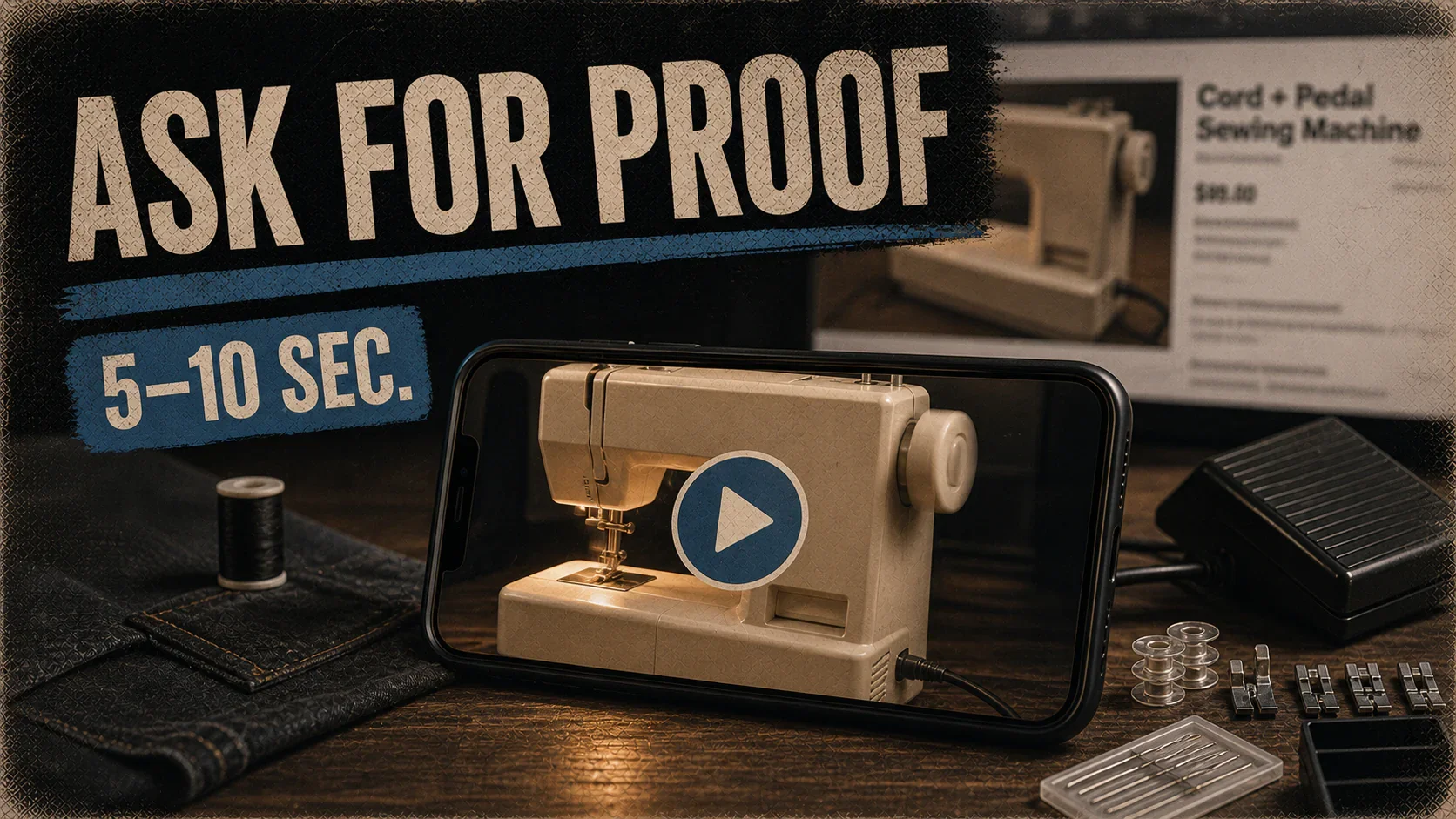
You don’t need to interrogate the seller, just have a normal conversation. “Hey, does everything work? Do you have the power cord and pedal? Would you mind sending me a quick video of it turned on?”
I think thats totally reasonable when you’re buying used equipment, and it matters because I don’t want you learning on a broken machine.
If the machine keeps jamming, skipping stitches, or doing weird crap, you might start blaming yourself and thinking, “Man, I suck at sewing.”
No.
That machine sucks.
The Best Deals Usually Come From People Who Just Want It Gone
I’d avoid buying from someone who clearly knows a lot about sewing. Not because their machine is going to be bad. If anything it’s probably in Mint condition. But they also know exactly what it’s worth, which means you’re not gonna get some crazy bargain.
The perfect seller for us is the person saying, “Yeah, I bought this a few years ago. Used it twice. It’s been sitting in the closet ever since.”
My man.
We have found our guy.
Get Nice and Cozy with that Machine.
You wanna get to the point where using your sewing machine doesn’t feel intimidating at all. You know how to thread it. You understand the foot pedal. You can sew a straight stitch and zigzag stitch relatively well. You can backstitch.
None of that feels dramatic anymore.
It just feels normal.
And that’s another reason I want you starting with a cheap machine. It lowers the stakes. If you spend $400 on your first sewing machine, every little mistake feels dramatically expensive. You’re sitting there thinking, “Dude, I spent a ton of money on this damn thing. I better be a master at this.”
But if somebody sold you a perfectly good Brother machine on Facebook Marketplace for $45?
Meh. Who cares?
Mess around with it. Experiment. Screw up. Learn.
That’s exactly what the first machine is for.
Your first sewing machine isn’t supposed to impress anybody. It’s supposed to get the ball rolling. Learn the machine. Get your reps. Build some confidence. Then start tailoring every piece of crappy fitting store bought clothing in your closet.
And eventually, if you realize, “Yo… I actually really like doing this,” cool.
Start cheap. Keep it simple. Learn the basics. And go from there.
And if you’re still thinking about buying one of those little mini sewing machines because they’re cheap and they look easy to use…
Yeah.
We need to talk.
Because there’s a reason I hate those things.